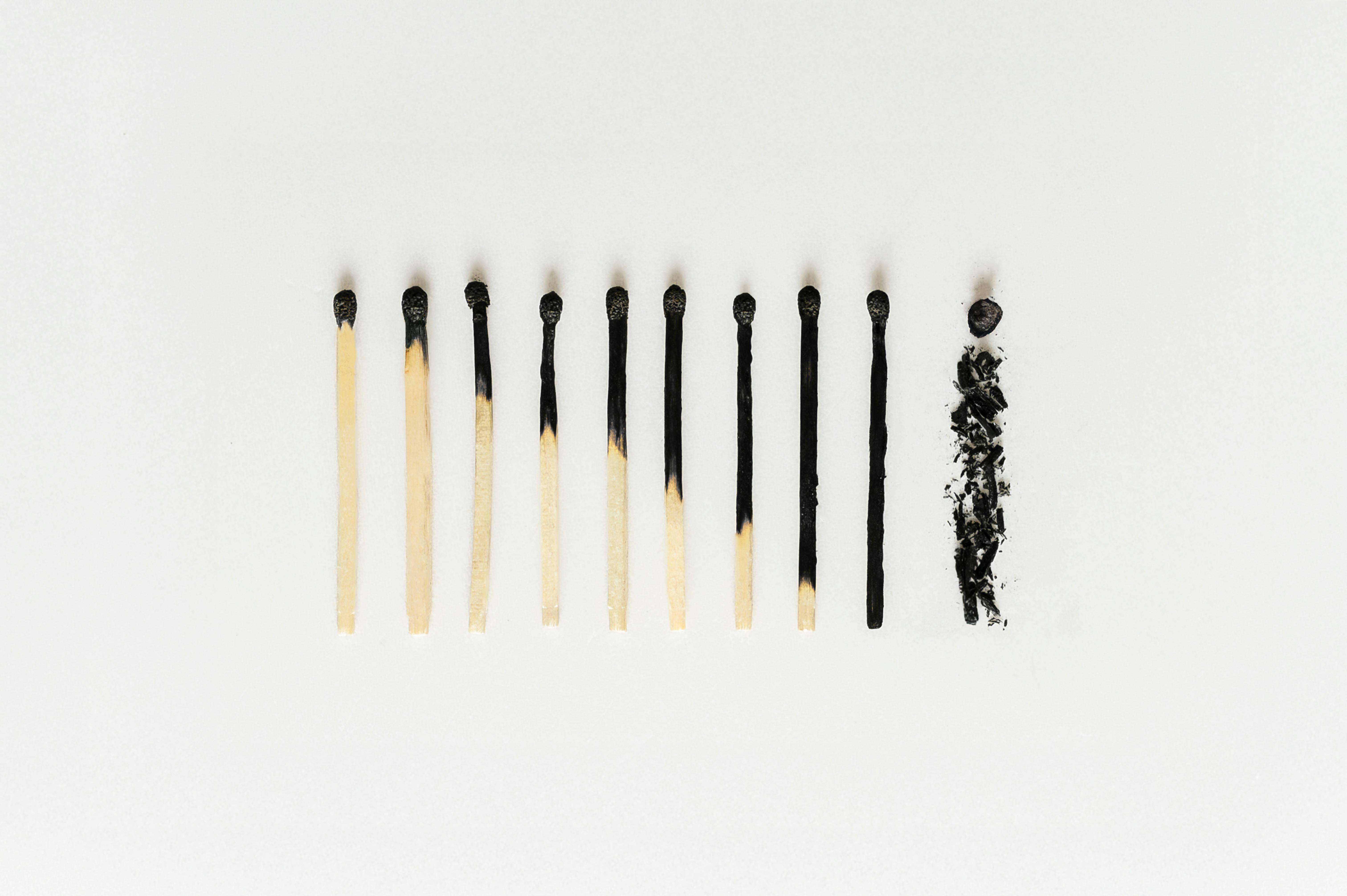
When Succesfful Leaders and Organisations Start Failing Quietly
Dr Lorenzo Todorow
www.thegrowingseed.org
Organisational failure is often imagined as sudden or dramatic: a scandal, a financial collapse, a public loss of confidence. In practice, however, many organisations begin to fail long before anything visible appears to be wrong.
Performance may still be strong. Reputations remain intact. Leadership teams continue to speak confidently about strategy and direction. And yet, internally, something has begun to drift. Decisions feel harder than they used to. Tensions reappear without resolution. People sense misalignment but struggle to articulate it in ways that feel legitimate.
What is eroding in these situations is not competence, but alignment between identity and purpose, both at the level of individual leaders and at the level of the organisation itself. This form of misalignment rarely produces immediate breakdown. Instead, it generates what might be called quiet failure: a gradual weakening of coherence, trust, and adaptive capacity.
This phenomenon is well documented across leadership, organisational behaviour, and identity research, even if it remains difficult for organisations to recognise from the inside.
Leadership identity and the limits of past success
Research on leader identity development suggests that leadership roles evolve faster than leaders’ self-concepts. As responsibility, scope, and visibility increase, leaders are often required to behave in ways that no longer fit the identity that previously sustained their success.
Herminia Ibarra’s work on leader identity transitions (Ibarra, 1999; Ibarra, Snook & Guillen Ramo, 2010) shows that many leaders experience tension when established ways of being effective no longer match the demands of a new role. Rather than abandoning familiar identities, leaders often protect them—doubling down on strengths that once worked, avoiding situations that threaten their self-image, or interpreting feedback defensively.
These dynamics rarely lead to obvious failure. More commonly, they lead to rigidity. Leaders continue to perform, but with diminishing adaptability. Over time, this identity lag becomes visible in patterns such as delayed decision-making, avoidance of difficult conversations, or a narrowing of perspective. The leader remains competent, but increasingly misaligned with what the organisation now requires.
Organisational identity and purpose drift
A parallel process occurs at organisational level. Research on organisational identity (Albert & Whetten, 1985; Gioia, Schultz & Corley, 2000) emphasises that organisations rely on relatively stable answers to questions about who they are and what they stand for. These identity claims help coordinate action, justify decisions, and maintain legitimacy.
Problems arise when identity narratives remain fixed while organisational realities change. Purpose statements continue to be invoked, but behaviour no longer consistently reflects them. Values become symbolic rather than operative. Leaders find themselves explaining decisions that sit uncomfortably with the organisation’s stated self-understanding.
This misalignment does not necessarily undermine performance in the short term. In fact, organisations may continue to succeed precisely because past identities were effective. The difficulty is that identity becomes a constraint rather than a resource. When purpose is no longer examined, it stops guiding action and instead becomes something to be defended.
Sensemaking under constraint
Karl Weick’s work on sensemaking (Weick, 1995;Weick, Sutcliffe & Obstfeld, 2005) is particularly helpful in understanding how quiet failure takes hold. Effective organisations depend on people being able to interpret ambiguous situations, voice concerns, and update shared understandings as conditions evolve.
Identity misalignment constrains this process.When certain interpretations are implicitly discouraged—because they challenge who the organisation believes itself to be—people learn to self-censor. Questions that feel disloyal or destabilising go unasked. Issues are discussed indirectly or reframed to fit existing narratives.
The result is not open conflict, but progressive loss of candour. Leaders are often surprised when problems eventually surface, not because signals were absent, but because sensemaking had already been narrowed. At this stage, failure still appears quiet, but the organisation’s capacity to learn has already been compromised.
Leadership derailment without collapse
Research on leadership derailment has traditionally focused on dramatic breakdowns. More recent work, however, points to subtler forms of failure among otherwise successful leaders. Hogan and Kaiser (2005) argue that derailment frequently occurs when leaders’ strengths become overused and inflexible, particularly under stress.
Importantly, this process often unfolds while performance indicators remain acceptable. Leaders continue to deliver results, but interpersonal costs accumulate. Trust erodes, feedback loops weaken, and the organisation becomes increasingly dependent on a small set of individuals or routines.
Here again, identity plays a central role. Leaders who are strongly identified with past success may find it difficult to revise how they lead without experiencing it as a threat to who they are. What appears externally as confidence may internally function as self-protection.
Defensive routines and the difficulty of correction
If quiet failure is so common, why is it so difficult to address? Chris Argyris’ work on defensive routines (Argyris, 1990) provides part of the answer. Highly capable professionals often develop sophisticated ways of avoiding embarrassment, threat, or loss of face—precisely the conditions triggered by identity misalignment.
These routines are especially strong in high-performing organisations, where success reinforces existing assumptions and discourages questioning. Over time, leaders and teams become skilled at maintaining surface agreement while deeper contradictions remain unexamined.
By the time misalignment becomes undeniable, options for correction are narrower and more costly.
Implications for leadership and organisational work
Quiet failure is not a sign of poor leadership or weak culture. It is a predictable risk of success, growth, and increasing complexity. The central issue is not whether organisations have a purpose, but whether they continue to examine the relationship between that purpose and how leadership is actually enacted.
Leaders and organisations that remain able to reflect on identity—individually and collectively—tend to adapt without crisis.Those that cannot often maintain an appearance of success while internal coherence steadily erodes.
The challenge, therefore, is not motivation or commitment, but the capacity to notice and work with misalignment before it hardens into dysfunction.
References
· Albert, S., & Whetten, D. A. (1985). Organizational identity. In L. L. Cummings& B. M. Staw (Eds.), Research in Organizational Behavior, 7, 263–295.
· Argyris, C. (1990). Overcoming organizational defenses. Boston, MA: Allyn &Bacon.
· Gioia, D. A., Schultz, M., & Corley, K. G.(2000). Organizational identity, image, and adaptive instability. Academy of Management Review, 25(1),63–81.
· Hogan, R., & Kaiser, R. B. (2005). What weknow about leadership. Review of GeneralPsychology, 9(2), 169–180.
https://doi.org/10.1037/1089-2680.9.2.169
· Ibarra, H. (1999). Provisional selves:Experimenting with image and identity in professional adaptation. Administrative Science Quarterly, 44(4),764–791.
https://doi.org/10.2307/2667055
· Ibarra, H., Snook, S., & Guillen Ramo, L.(2010). Identity-based leader development. In N. Nohria & R. Khurana(Eds.), Handbook of Leadership Theory andPractice. Harvard Business Press.
· Weick, K. E. (1995). Sensemaking in organizations. Thousand Oaks, CA: Sage.
· Weick, K. E., Sutcliffe, K. M., & Obstfeld,D. (2005). Organizing and the process of sensemaking. Organization Science, 16(4), 409–421. https://doi.org/10.1287/orsc.1050.0133